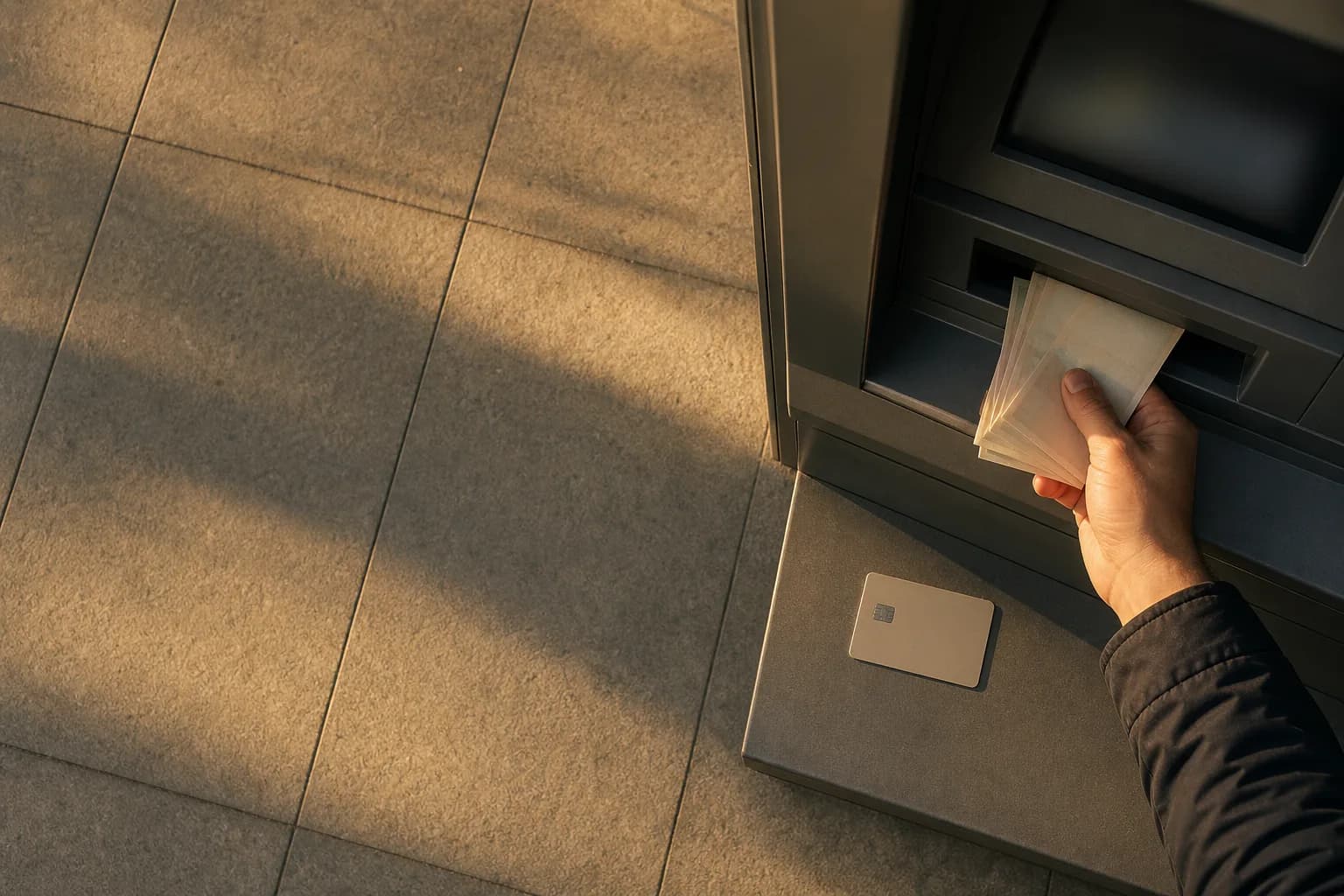
ATM fees can feel like tiny, unavoidable charges—until you look back and realize they have chipped away at money you meant to use elsewhere. When you need cash quickly, the nearest ATM may be convenient, but that convenience can come with more than one fee.
The good news is that learning how to avoid ATM fees usually does not mean giving up cash or complicating your life. It means understanding where the charges come from, checking your account’s rules, and building a simple routine around when and where you withdraw money.
Why ATM fees happen in the first place
An ATM is not automatically free just because it is available to use. The key question is whether the machine belongs to your bank or credit union—or to a network your account treats as fee-free.
When you use an out-of-network ATM, you may see two separate charges:
- The ATM owner may charge a fee for using its machine.
- Your own bank or credit union may charge an out-of-network withdrawal fee.
The ATM screen should disclose the machine owner’s fee before you complete the withdrawal. Your financial institution’s fee may appear later in your account activity, depending on its policies.
That possibility of a double charge is why an unplanned cash withdrawal can cost more than expected. One stop at an ATM may not seem important in the moment, but repeating the habit can make it harder to keep your spending plan on track.
The situations that trigger repeat fees
ATM fees are rarely about being careless. They tend to happen when everyday circumstances make the paid option feel like the only practical choice.
You need cash at the last minute
Maybe a restaurant only accepts cash, you are splitting a bill, or a local event has cash-only vendors. When you have no cash on hand, the closest ATM wins—even if it is outside your network.
You withdraw small amounts often
Taking out only what you need for the next day or two can seem cautious. But if every small withdrawal happens at a fee-charging ATM, the fixed fee follows each trip. Planning fewer withdrawals can reduce how often you face that choice.
You do not know your network options
Many people know where their bank has branches but do not know which ATMs their account allows them to use without a fee. Some accounts have a broad ATM network, partnerships with other institutions, or reimbursement policies. Others have more limited access.
You rely on whatever ATM is nearby
ATMs in convenience stores, entertainment venues, transit hubs, and other high-convenience locations are easy to spot. Before using one, check whether it is in your network rather than assuming it is.
You use an ATM while traveling
Travel changes your usual routine. You may be far from a familiar branch, navigating an unfamiliar area, or focused on other travel costs. ATM fees can become an afterthought, especially when you need local cash right away.
Start with your account’s actual ATM rules
Before changing your withdrawal habits, find out what your bank or credit union offers. The answer is usually available in your account details, fee schedule, mobile app, or customer support materials.
Look for these details:
- Which ATM network is included with your account
- How to find in-network ATMs near you
- Whether your account charges for out-of-network withdrawals
- Whether the institution reimburses some ATM-owner fees and under what conditions
- Whether there are limits, account requirements, or locations that do not qualify
- Whether you can set alerts for low balances or posted fees
Do not rely on an old memory of what your account used to offer. Account terms can change, and different checking accounts at the same institution may have different ATM access.
If the information is unclear, ask a direct question: “Which ATMs can I use without a fee, and what fees could still apply?” Getting a clear answer now is easier than sorting through unexplained charges later.
Make a fee-free ATM map before you need cash
The best time to locate a free ATM is not when you are standing in front of a paid one. Use your bank or credit union’s ATM locator to identify convenient options around places you already visit.
Think beyond a single location. Save a few choices:
- One near home
- One near work, school, or your regular commute
- One near the grocery store or another place you visit routinely
- One backup option for evenings or weekends
If your institution’s locator includes filters, confirm that the location is an ATM you can use without a withdrawal fee—not merely a branch location. Also check operating hours. An ATM inside a building may not be accessible whenever you need it.
Saving these locations in your phone’s map app can make a fee-free option nearly as easy to find as the closest storefront ATM.
Plan withdrawals around your real cash needs
Avoiding fees does not mean carrying more cash than feels comfortable. It means making a conscious plan instead of withdrawing in a hurry.
Start by noticing what you actually use cash for over a typical week or two. You might use it for personal spending, small purchases, tips, laundry, shared household expenses, or places that do not accept cards. Then choose an amount and withdrawal schedule that fits that pattern.
For example, you might withdraw cash during a regular grocery trip rather than whenever your wallet is empty. The goal is not to follow someone else’s schedule. It is to reduce emergency withdrawals from unfamiliar machines.
A few practical guardrails can help:
- Keep a modest cash cushion for routine cash-only expenses.
- Write down the purpose of the cash when you withdraw it.
- Store cash securely, especially if you withdraw less often.
- Revisit your plan if you regularly run out early or carry more than you use.
If cash tends to disappear without a clear record, divide it by purpose in separate envelopes or label it in a note on your phone. This is not about being strict; it is about making cash spending visible enough to plan for.
Pause at the ATM screen
When an out-of-network ATM displays a fee, treat that screen as a decision point—not a formality you have to accept.
You can usually cancel the transaction before completing it. Take a moment to ask:
- Is cash truly necessary right now?
- Can I pay another way?
- Is there a fee-free ATM a short walk or drive away?
- Could I wait until my next planned withdrawal?
Sometimes paying the fee is the practical choice, and that is okay. The point is to make it intentional rather than automatic. A conscious exception is different from a repeated pattern you never meant to create.
Use account alerts to catch fees early
Alerts cannot prevent every fee, but they can reveal a pattern while it is still easy to change. Check whether your bank or credit union allows notifications for transactions, low balances, or charges posted to your account.
Review your transactions periodically and look specifically for ATM-related entries. If you find a fee, note where and why it happened. Was it a late-night withdrawal? A trip? A cash-only purchase you could have anticipated?
You do not need a complicated spreadsheet. A simple note such as “ATM fee after concert” can show which situations need a backup plan. Over time, you may notice that most fees come from one or two predictable moments.
Build a backup plan for cash-only surprises
The hardest ATM fees to avoid are often tied to surprise needs. A backup plan gives you options when your usual routine breaks down.
Consider keeping a small emergency cash amount at home or in a secure place, if that works for your situation. You can also carry a modest amount in your wallet for predictable small needs. Replace it during your next fee-free withdrawal rather than waiting until you are completely out.
It may also help to keep a payment backup available, such as a debit card, where appropriate. Before relying on it, remember that some merchants may have card minimums or may not accept cards at all. The purpose is flexibility, not assuming every purchase can be handled the same way.
Avoid common workarounds that can create new costs
Trying to dodge one ATM fee can sometimes lead to another expense or problem. Keep the full picture in mind.
Do not assume cash back at checkout is always available or free; store rules and purchase requirements vary. Do not make extra purchases just to access cash. And do not over-withdraw simply because a fee-free ATM is available if carrying that much cash would make you uneasy or likely to overspend.
Also, be cautious with unfamiliar machines and screens. Confirm the fee disclosure, protect your PIN, and keep your receipt or transaction record if something looks unusual. If you believe a charge is incorrect, contact your financial institution promptly and keep any details you have about the withdrawal.
When it may be time to review your banking setup
If you have followed a reasonable plan but fee-free ATMs are consistently hard to access where you live, work, or travel, your current account may not match your needs. That does not mean you need to change accounts immediately. It means it is worth comparing your existing options.
Ask whether your bank or credit union has another account type, a better-supported network, or a different approach to out-of-network fees. You can also compare institutions based on ATM access, account fees, minimum-balance rules, digital tools, and branch availability—not ATM policies alone.
This is general information, not personalized financial advice.
A simple ATM-fee prevention routine
Use this short routine to make fee-free choices easier:
- Check your account’s ATM network, fees, and any reimbursement rules.
- Save several in-network ATM locations near your regular stops.
- Choose a realistic time to withdraw cash as part of an existing errand.
- Keep a small, secure cash buffer for predictable cash-only moments.
- Turn on useful account alerts and review ATM charges when they appear.
- Cancel and reconsider when an ATM displays a fee you did not plan for.
ATM fees are not always avoidable, but they do not have to become a recurring budget leak. With a little advance planning, you can keep cash available when you need it and reserve more of your money for the things you actually choose to spend it on.