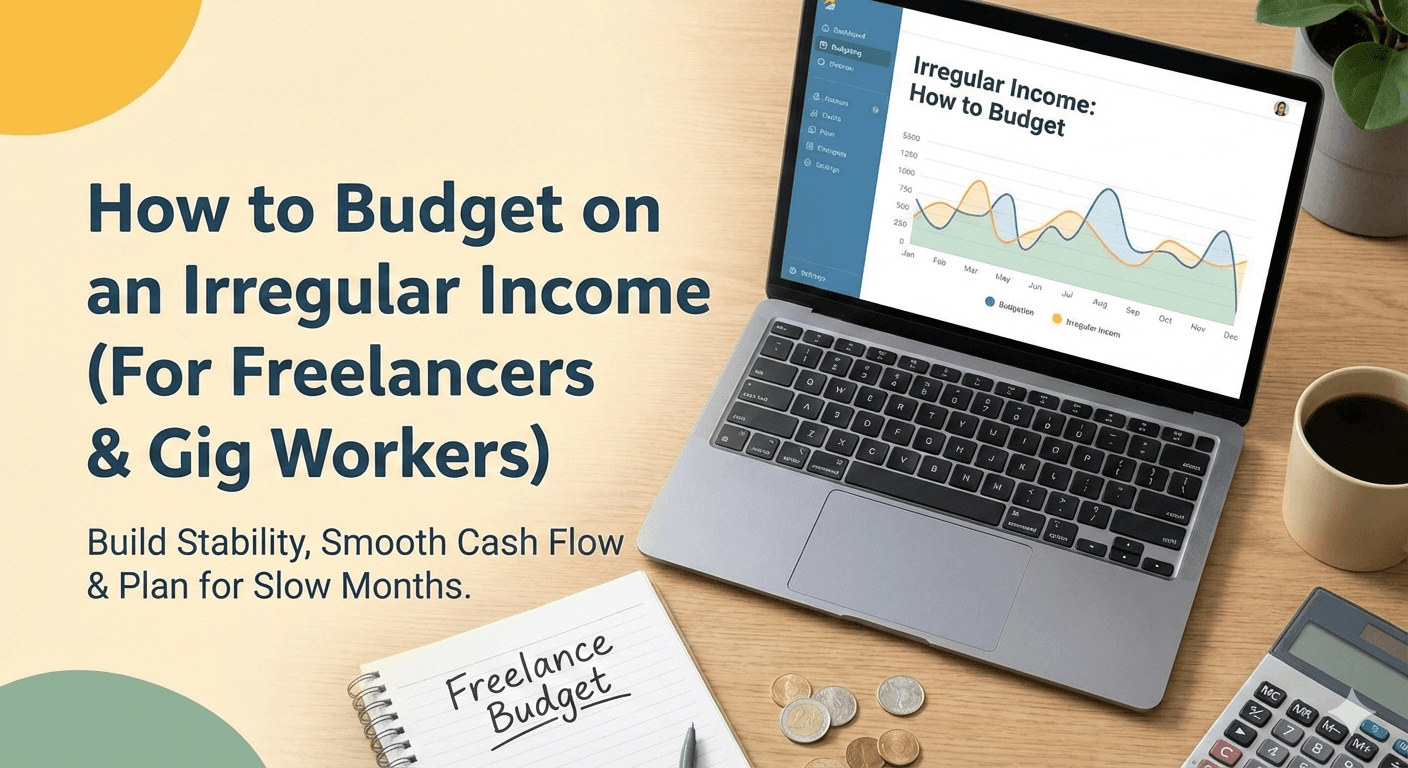
How to Budget on an Irregular Income (For Freelancers & Gig Workers)
If your income changes every month, most budgeting advice feels unrealistic.
You can’t set a perfect monthly number… because your paycheck isn’t consistent.
Good news: you can budget on irregular income—you just need a system built for variability.
The mindset shift: budget for stability, not precision
With variable income, the goal isn’t “perfect categories.” The goal is:
- No panic during slow months
- A plan for taxes and irregular bills
- A way to decide what to do with extra income during strong months
Step 1: Find your “baseline” income
Baseline = the amount you can reasonably count on.
Pick one:
- Your lowest typical month (conservative and safe), or
- Your average month minus a buffer (ex: average minus 10–20%)
You’re building a budget that survives a slow month.
Step 2: Build a “bare-bones budget”
Your bare-bones budget covers essentials only:
- Housing
- Utilities
- Basic groceries
- Transportation
- Insurance
- Minimum debt payments
This becomes your “must cover” number each month.
Step 3: Create a cash buffer (this is the game changer)
A buffer is money set aside to smooth out the ups and downs.
Start small:
- First goal: $300–$1,000
- Next goal: one month of expenses
- Long-term: 3–6 months (depending on your situation)
Even a small buffer reduces stress dramatically.
Step 4: Use the “pay yourself a salary” approach (optional but powerful)
If you can, set up two accounts:
- Income account (money comes in here)
- Spending account (your “salary” goes here)
Then pay yourself a consistent amount weekly or biweekly.
This creates stability—even when income is spiky.
Step 5: Plan for taxes before you spend
If you’re self-employed, taxes can surprise you.
Simple approach:
- Set aside a percentage of each payment into a “tax” bucket/account.
- If you’re not sure what percent, start conservative and adjust later.
(For personalized tax planning, talk to a qualified pro—rules vary widely.)
Step 6: Use a priority ladder for “extra” income months
When you earn more than your baseline, decide where it goes in order.
Example priority ladder:
- Catch up essentials (if you’re behind)
- Taxes set-aside (if needed)
- Starter emergency fund
- Debt extra payments
- True expenses (car repairs, annual bills, gifts)
- Goals (travel, down payment, etc.)
- Fun money (yes—include some)
This prevents “big months” from disappearing.
Step 7: Budget by paycheck (if monthly budgeting feels too hard)
If you get paid multiple times per month (or in chunks), try a paycheck budget:
- Assign the next paycheck to the next set of bills
- Keep a running list of “next due” expenses
- Review weekly
This method is less elegant, but very practical.
Common pitfalls (and fixes)
Pitfall: Overspending in a high-income month Fix: Use your priority ladder and move money into savings/true expenses first.
Pitfall: Forgetting annual/seasonal expenses Fix: Add “true expense” sinking funds (even tiny ones).
Pitfall: No system for slow months Fix: Buffer + baseline budget + conservative planning.
A simple template you can copy
- Baseline income: _______
- Bare-bones expenses: _______
- Monthly buffer goal: _______
- Taxes set-aside: _______
- Extra income priority ladder: (write it out)
Disclosure: This post is for educational purposes and isn’t financial advice.