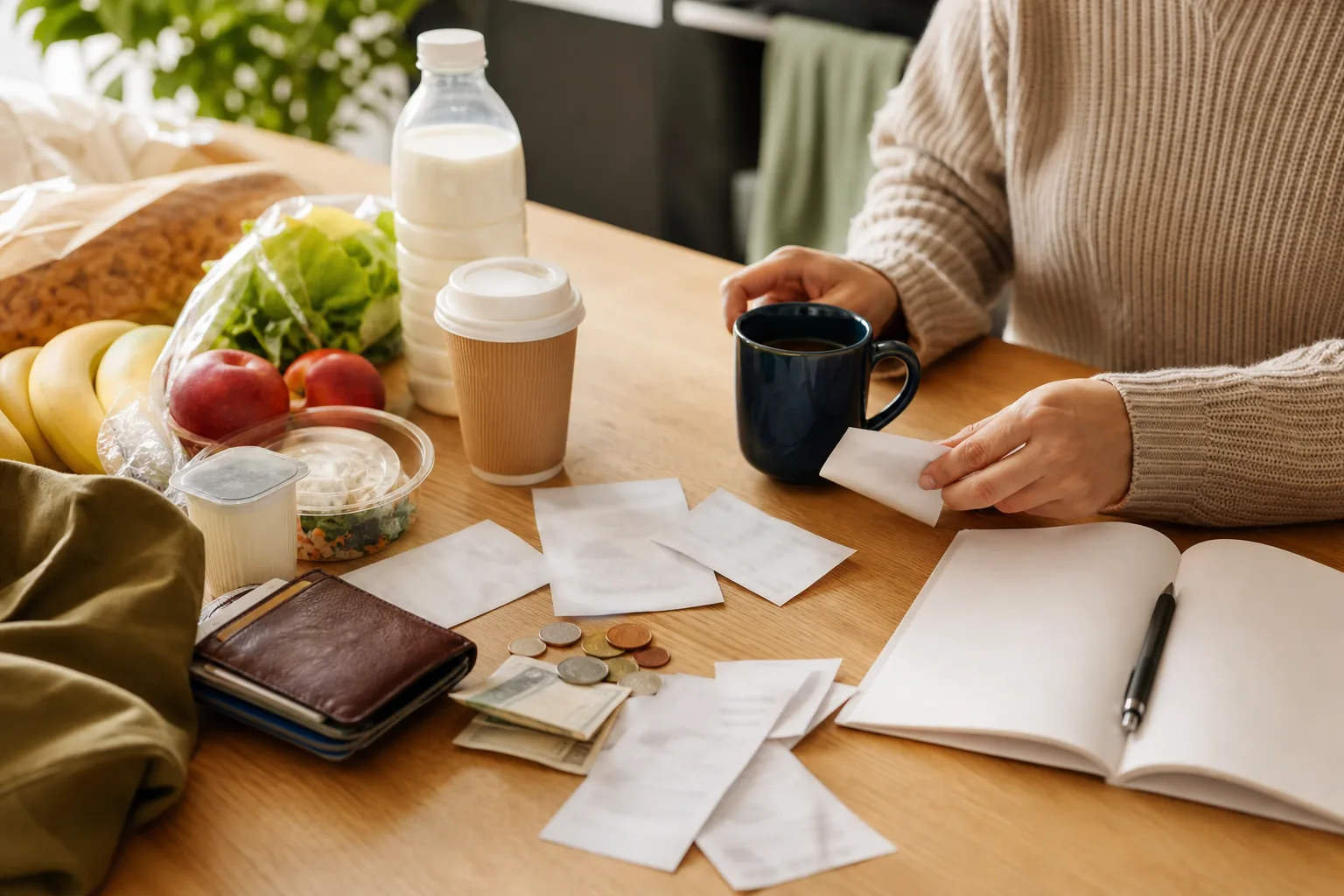
It is frustrating to reach the end of the month with less money than you expected—especially when you did not make any obvious big splurges. Often, the issue is small purchases adding up: a coffee here, a delivery fee there, and a few convenience buys that never felt significant on their own.
That does not mean you are careless or that every little treat has to go. Small spending is part of everyday life. The challenge is that repeated transactions are easy to overlook, especially when they happen in different places, on different days, and for different reasons.
The goal is not a joyless budget. It is to make the total visible, decide which small purchases are worth it to you, and set a clear limit for the rest.
Why small purchases are so hard to notice
A large purchase gets attention because it creates a clear decision: “Do I really want to spend this much?” Small purchases rarely trigger the same pause. They can feel too minor to record, reconsider, or even remember later.
A few patterns make this spending especially easy to miss:
- Frequency hides the total. A modest purchase repeated most weekdays can become a meaningful monthly category.
- Purchases are spread across categories. A café drink, gas-station snack, and convenience-store lunch may all serve the same purpose—food on the go—but appear as separate transactions.
- Convenience costs are easy to dismiss. Delivery fees, service charges, upgraded shipping, parking, and in-app add-ons can seem necessary in the moment.
- Small spending often solves a real problem. You may be tired, rushed, hungry, bored, or trying to make a difficult day easier. The purchase is not random; it is a quick solution.
- Subscriptions stay out of sight. A low monthly charge may be reasonable on its own, but several recurring charges can quietly reduce the money available for everything else.
That is why “I only spent a little” can be true of every transaction and still leave you over budget overall.
Look for spending clusters, not just single purchases
Judging every transaction separately can make budgeting feel restrictive. A more useful approach is to look for spending clusters: groups of purchases that meet a similar need or happen in the same situation.
Your transactions might reveal clusters such as:
- Coffee and breakfast bought while commuting
- Snacks and drinks picked up during errands
- Delivery orders on busy evenings
- Small online orders prompted by free-shipping thresholds
- Digital add-ons, games, or app purchases during downtime
- Convenience items bought because there was no plan for meals or supplies
The point is not to label these choices as bad. Instead, ask what role each cluster plays. If delivery helps you get through demanding evenings, the solution may not be “never order delivery.” It could be keeping a few ultra-easy meals at home, setting aside money for planned delivery nights, or choosing pickup when that works.
A cluster gives you something concrete to address. “Stop overspending” is vague. “Keep weekday coffee spending within my planned amount” is a decision you can actually follow.
Do a short spending review
You do not need to track every penny forever to find a pattern. Start with a recent period of spending—often the last few weeks are enough to show what is happening.
Review your bank, card, and payment-app transactions. Then follow this process:
- Mark transactions that were small enough to feel routine or forgettable.
- Group similar purchases together, even if the merchant categories differ.
- Add each group to find its total for the period.
- Note when and where those purchases tend to happen.
- Write down the trigger: hunger, time pressure, commuting, social plans, boredom, a sale, or something else.
- Decide which clusters you value and which you would be happy to reduce.
Be specific when you label a group. “Miscellaneous” hides information. “Afternoon snacks at work” or “late-night delivery fees” shows you where a change could help.
You may also find that the issue is not the purchase itself, but its timing. Buying groceries is necessary. Repeatedly buying groceries without a list because you are unsure what is at home can lead to expensive duplicates and extra convenience stops.
Separate treats from friction spending
Not all small purchases deserve the same response. One helpful distinction is between intentional treats and friction spending.
An intentional treat is something you choose, enjoy, and would likely choose again if you saw the monthly total. It might be a favorite café visit, flowers, a hobby supply, or a weekly meal out with a friend.
Friction spending is money spent mainly because the path of least resistance was expensive. Think of a forgotten lunch leading to a costly convenience meal, a rushed order with extra fees, or buying an item again because you could not find the one you already had.
This distinction protects spending that brings genuine enjoyment while helping you focus on purchases that do not feel worthwhile afterward.
Try this question when reviewing a cluster:
If I planned for this amount at the start of the month, would I still want to spend it this way?
If the answer is yes, it belongs in your budget. If the answer is no—or “not this often”—you have found a useful place to adjust.
Set a realistic limit instead of a total ban
A hard rule such as “no coffee out” or “no delivery ever” may work briefly, but it can backfire if it ignores your schedule and preferences. A realistic limit is more likely to last.
Start by choosing one spending cluster, rather than trying to change every category at once. Give it a monthly or weekly amount that fits your broader budget and still leaves room for your priorities. You can use a dollar amount, a number of occasions, or both.
Examples of flexible limits include:
- Choose a set number of café visits each week and make the rest at home.
- Set aside a specific amount for delivery, including fees and tips.
- Keep a small “convenience” category for unplanned snacks, toiletries, and quick purchases.
- Allow a planned amount for digital extras, then pause before purchases beyond that amount.
Include the full cost when you set the limit. A delivery meal is not only the menu price; it may also include fees, tax, and a tip. An online order may include shipping or an add-on needed to reach a minimum. Seeing the complete cost helps your budget reflect real life.
If you regularly exceed the limit, treat that as information rather than failure. The limit may be too low, the category may be covering a bigger need, or another part of the routine may need attention.
Make the better choice easier
Willpower is unreliable when you are hungry, busy, or stressed. Small changes to your environment can reduce friction spending without requiring constant self-control.
Consider trying one or two of these adjustments:
- Keep portable snacks, water, or breakfast options where you will actually use them.
- Create a short list of quick meals you can make with ingredients you usually keep on hand.
- Put a reminder on your phone before the time you tend to make repeat purchases.
- Remove saved payment details from shopping or delivery apps if one-tap checkout encourages spur-of-the-moment orders.
- Wait until the next day before placing nonessential online orders.
- Bring a list when running errands, especially for groceries and household items.
- Choose a designated treat day rather than deciding in the moment every day.
- Move money for a flexible-spending category into a separate account or track it separately, if that helps you see what remains.
The best adjustment fits the reason you spend. If you buy lunch because mornings are chaotic, a complicated meal-prep plan may not help. A few easy lunch options prepared or purchased ahead of time may be far more realistic.
Leave room for the unexpected
Small expenses are not always avoidable. A forgotten umbrella, a parking meter, a school event, or a last-minute household need can happen in any month. If your budget has no room for these costs, every unplanned purchase can feel like a failure.
Build a small flexible category for everyday surprises when possible. This is different from a long-term emergency fund, which is generally meant for more serious unexpected costs. A flexible category gives ordinary life somewhere to go in the budget.
It also helps to review your plan before predictable high-spending periods. Travel, holidays, busy work weeks, and school events may increase the temptation or need for convenience purchases. Planning extra room in advance is often more effective than trying to be unusually strict during a demanding week.
Review the pattern, then adjust gently
Check your spending clusters at the end of each week or month. Look for trends, not perfection.
Ask yourself:
- Which small purchases gave me real value?
- Which were mostly caused by a preventable problem?
- Did my limit fit my actual life?
- What is one change that would make next week easier?
Make only one or two adjustments at a time. You might reduce delivery frequency, add a snack to your work bag, or give yourself a clearer weekly coffee amount. Small, repeatable changes are more useful than an ambitious reset that makes daily life harder.
Small purchases are not automatically the reason a budget is struggling, and you do not need to eliminate every convenience or pleasure. But when they add up without a plan, they can crowd out goals that matter more to you. By spotting your spending clusters, preserving the treats you truly enjoy, and setting realistic limits, you can make everyday spending feel intentional again.
This is general information, not personalized financial advice.