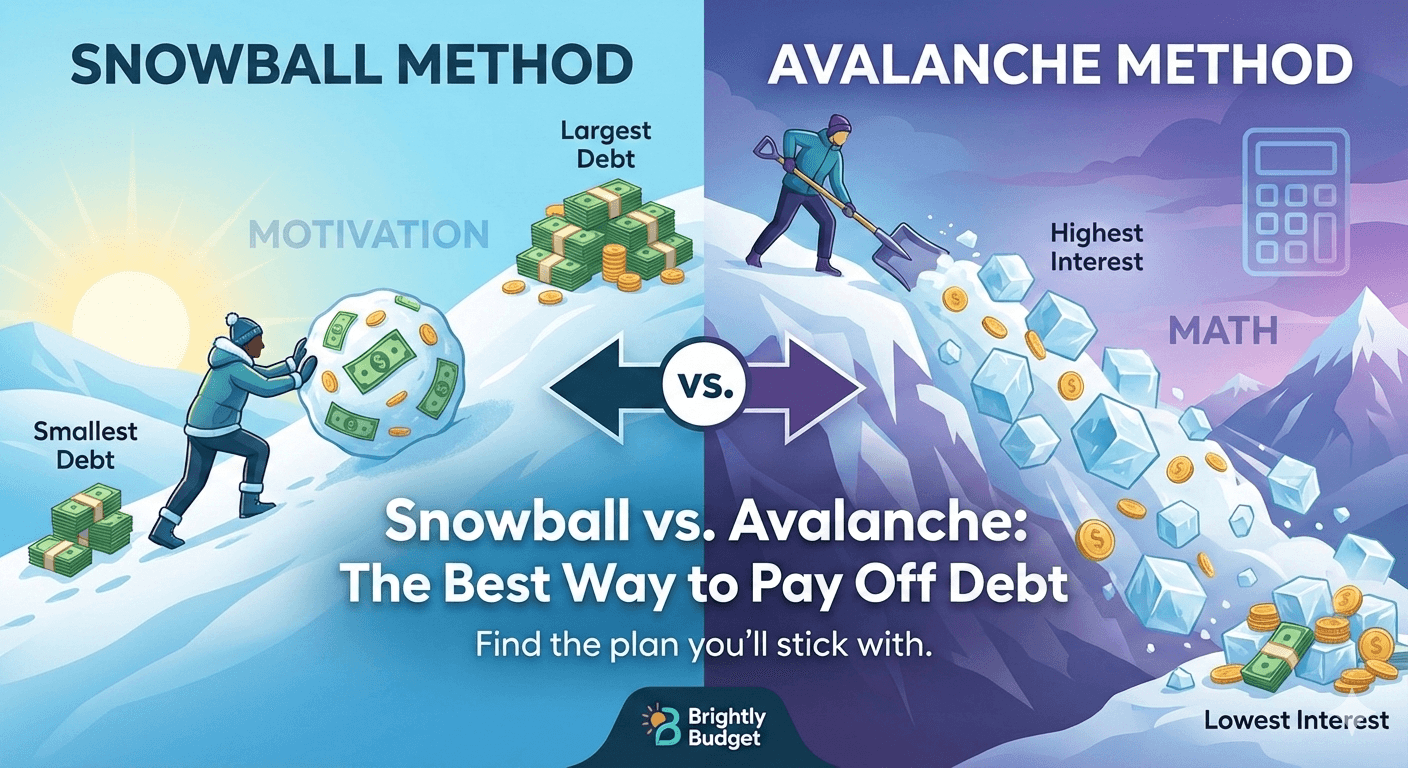
Snowball vs. Avalanche: The Best Way to Pay Off Debt
If you have debt, you’ve probably heard two popular strategies:
- Debt Snowball
- Debt Avalanche
Both work. The best one is the one you’ll follow long enough to win.
Let’s break them down (without the shame, and without pretending it’s easy).
First: what matters most
Debt payoff success usually comes down to:
- A plan you can follow consistently
- One “extra payment” amount you can sustain
- Fewer new purchases on credit while you’re paying it down
Method matters—but momentum matters more.
The Debt Snowball method (motivation-first)
How it works:
- List debts from smallest balance to largest
- Pay minimums on everything
- Put any extra money toward the smallest balance
- When it’s paid off, roll that payment into the next debt
Why people love it:
- Fast “wins” early
- Motivation increases as debts disappear
- Great if debt feels emotionally heavy
Potential downside:
- You may pay more interest overall if high-interest debt isn’t tackled first
The Debt Avalanche method (math-first)
How it works:
- List debts from highest interest rate to lowest
- Pay minimums on everything
- Put any extra money toward the highest interest rate
- When it’s paid off, roll that payment into the next-highest rate
Why people love it:
- Usually saves the most money in interest
- Often pays debt off faster on paper
Potential downside:
- If your highest-interest debt is a big balance, you may wait longer for your first “win”
Which method should you choose?
Use this simple rule:
Choose Snowball if…
- You need visible progress to stay motivated
- You’ve started (and quit) debt plans before
- You feel overwhelmed and need a confidence boost
Choose Avalanche if…
- You’re motivated by efficiency and numbers
- You can stay consistent even without quick wins
- Your highest-interest debt is also a manageable balance
The truth:
If Snowball helps you stick with the plan, it can outperform Avalanche in real life—even if the math says otherwise.
How to start (in 30 minutes)
1) List your debts
Create a list with:
- Balance
- Interest rate
- Minimum payment
- Due date
2) Pick your “extra payment” amount
Even $25–$100 makes a difference. The key is consistency.
Places to find extra cash:
- Subscription cancellations
- Eating out cutbacks (temporary)
- Selling unused items
- A small side gig burst (if realistic)
3) Automate minimum payments
This prevents missed payments and late fees.
4) Make your “target debt” obvious
Put a sticky note somewhere visible or set a reminder:
- “This month: pay extra toward Debt #1”
Important: don’t skip a starter emergency fund
Debt payoff can get derailed by one unexpected expense.
If you have no buffer at all, consider building a small starter fund first (even $300–$1,000) so you don’t bounce right back to credit cards.
Momentum tips that actually help
- Celebrate milestones (paid off a card? celebrate!)
- Track progress visually (charts are weirdly motivating)
- Reduce friction (auto-transfer your extra payment right after payday)
- Avoid “all or nothing” thinking (a messy month doesn’t erase progress)
A note on interest rates, refinancing, and consolidation
Sometimes you can reduce interest costs by:
- Refinancing (if your credit and terms make sense)
- Balance transfers (watch fees and promo expiration)
- Consolidation loans (only if spending behavior is under control)
If you’re not sure, it’s okay to ask a qualified financial professional to review options.
Disclosure: This post is for educational purposes and isn’t financial advice.