Brightly Field Notes
Money guidanceyou can use this month.
Practical explanations, comparisons, and step-by-step guides for the parts of budgeting that tend to get complicated.


Why Do I Keep Dipping Into My Savings Every Month?
Repeatedly moving money from savings to cover everyday costs usually signals a cash-flow gap, not a personal failure. Learn how to spot the pattern, plan for irregular expenses, and set a savings target that can stay put.

Why Your Budget Works on Paper but Not in Real Life—and How to Fix It
A budget can balance on paper and still break down when bill due dates, changing everyday costs, and irregular expenses are left out. Learn how to build a flexible spending plan around your real pay schedule and real life.

Why Does One Purchase Ruin My Budget? How to Reset and Recover
One unexpected purchase does not have to derail your month. Learn how to reset your spending plan, protect essential expenses, and build flexibility without expecting perfection.

How to Build a Budgeting Habit That Sticks
Keep restarting your budget? A simple, flexible money-review routine can help you return to your plan, adjust for real life, and build a budgeting habit with Brightly Budget.

Why Do I Keep Overspending on Small Purchases? How to Spot and Stop Budget Leaks
Small purchases can quietly drain your budget because they are easy, repeated, and easy to forget. Learn how to spot your triggers, review recurring costs, and build simple pauses that help you spend more intentionally.

Why Unexpected Expenses Keep Ruining My Budget—and How to Plan for Them
Irregular bills can derail a monthly budget when there is no plan for them. Learn how sinking funds, realistic tradeoffs, and an emergency cushion can help you prepare for common expenses without making your budget overly restrictive.

Running Out of Money Before Payday? How to Make It Last
Running out of money before payday is often a timing and planning problem, not a personal failure. Learn how to map your pay cycle, spot pressure points, and make your money last without extreme cutbacks.
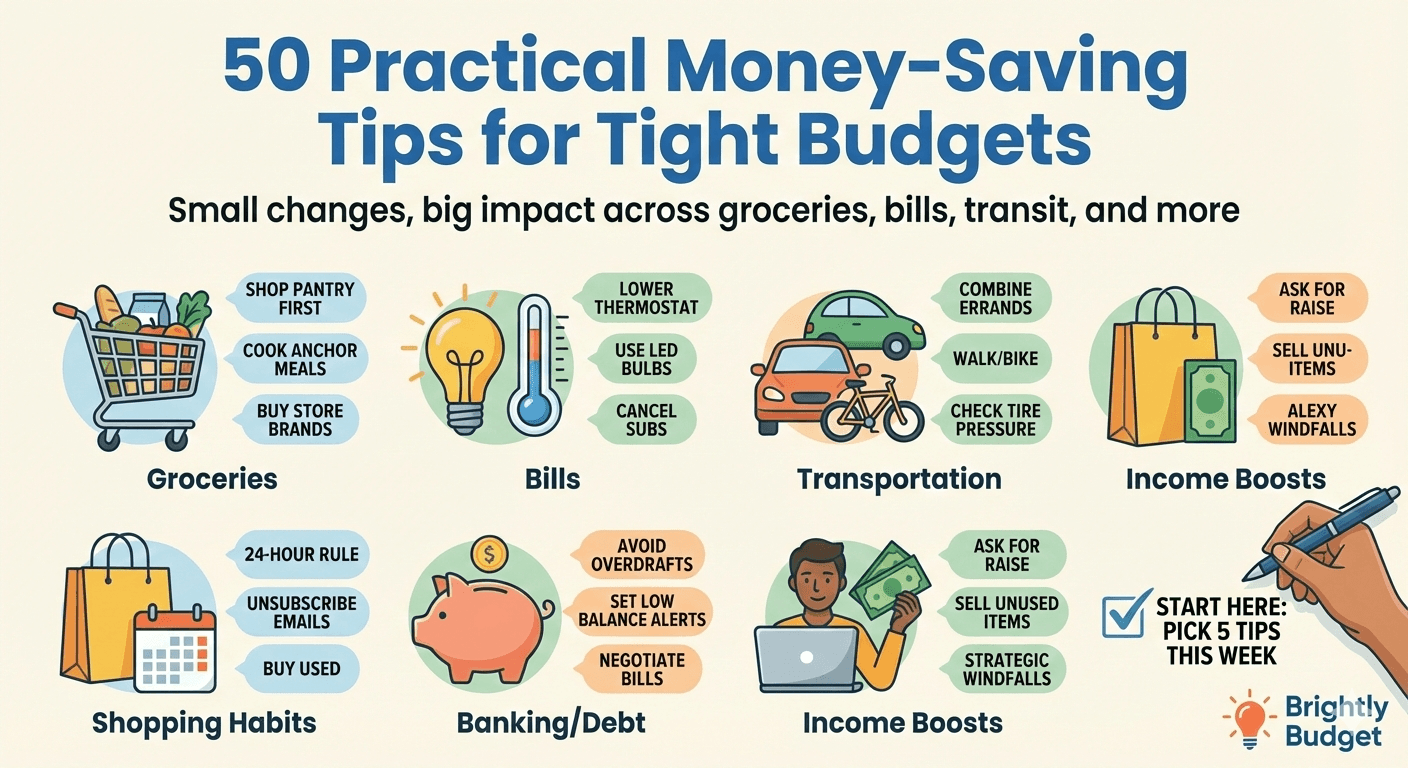
50 Practical Money-Saving Tips for Tight Budgets
Trying to stretch a tight budget? Start here. These 50 practical money-saving tips cover groceries, bills, transportation, subscriptions, and everyday habits—small changes that add up fast.

Snowball vs. Avalanche: The Best Way to Pay Off Debt
Debt snowball or debt avalanche? Learn the differences, the pros and cons, and how to choose the payoff method you’ll actually stick with—plus a simple plan to get started this week.